
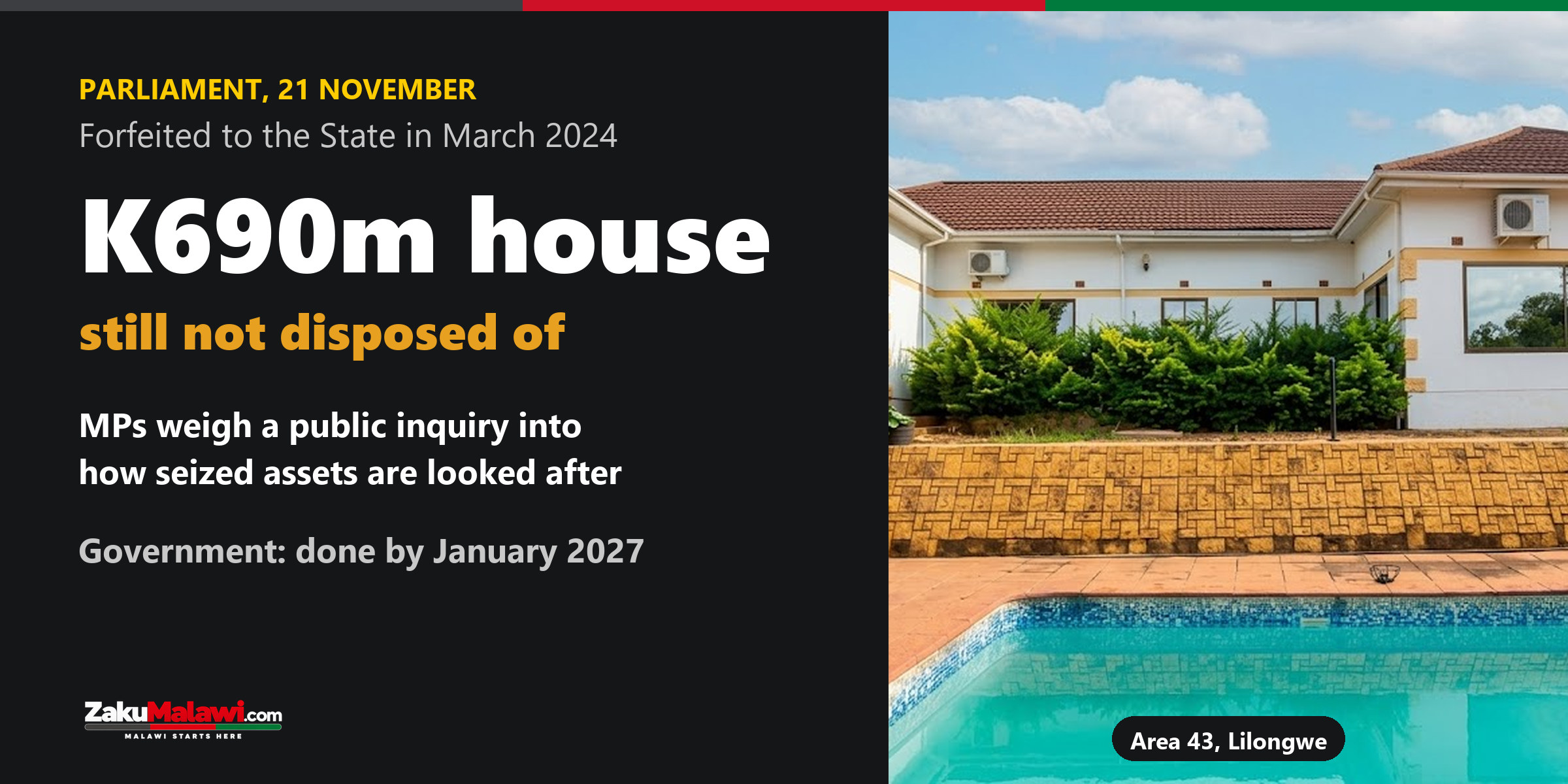
Parliament’s Legal Affairs Committee is considering a public inquiry into how Malawi manages confiscated and forfeited assets, after properties recovered from financial crime cases sat unused and fell into disrepair, The Nation reported on Saturday, 21 November 2026.
The report centres on the K690 million house in Area 43, Lilongwe, forfeited from former budget director Paul Mphwiyo in March 2024. The house remains dilapidated about 15 months after the Director of Public Prosecutions said disposal would finish by August 2025, The Nation wrote.
Key facts
- Legal Affairs Committee chair Gilbert Khonyongwa said the committee may hold a public inquiry
- Focus includes the forfeited K690 million Area 43 house linked to Paul Mphwiyo
- Committee wants answers from FIA, the ACB and the DPP on delays and losses
- Ministry of Justice says disposal should be finished by January 2027
- Financial Crimes (Confiscation Fund) Regulations gazetted on 24 July 2026
How long it has taken
March 2024
Paul Mphwiyo’s Area 43 house is forfeited to the State
July 2025
The DPP says disposal is under way and should finish by August 2025
24 July 2026
Financial Crimes (Confiscation Fund) Regulations gazetted
21 November 2026
House still unsold; Legal Affairs Committee weighs a public inquiry
January 2027
Ministry of Justice’s new target to finish disposal
What Khonyongwa told The Nation
The Nation said Khonyongwa replied in writing that the committee was weighing a public inquiry to hold agencies accountable for preserving recovered assets. He said it planned to speak to the Financial Intelligence Authority, the Anti-Corruption Bureau and the Director of Public Prosecutions on the status of confiscated property, reasons for delays and whether government had lost money.
He said recovering proceeds of crime should not stop at court orders but needs working systems to keep assets in shape and return value to the public.
Government’s disposal timeline
Ministry of Justice and Constitutional Affairs deputy director of communications Joyful Paliani told The Nation on Wednesday that the DPP would convene a high-level meeting with law enforcement and the Ministry of Finance on disposal. She said government might assign properties for public use instead of only selling them, and expected the process to finish by January 2027.
Knight Frank managing director Desmond Namangale told the paper that empty properties lose value without upkeep, and called for a legal framework with clear sale timelines or a role for the Ministry of Lands.
Why CSAT says it matters
Centre for Social Accountability and Transparency executive director Willy Kambwandira told The Nation that rotting confiscated assets demoralise investigators and waste what courts hand back to the state. The Nation linked the debate to the Financial Crimes (Confiscation Fund) Regulations, 2026, published in the Gazette on 24 July, which set rules for money recovered from crime.