
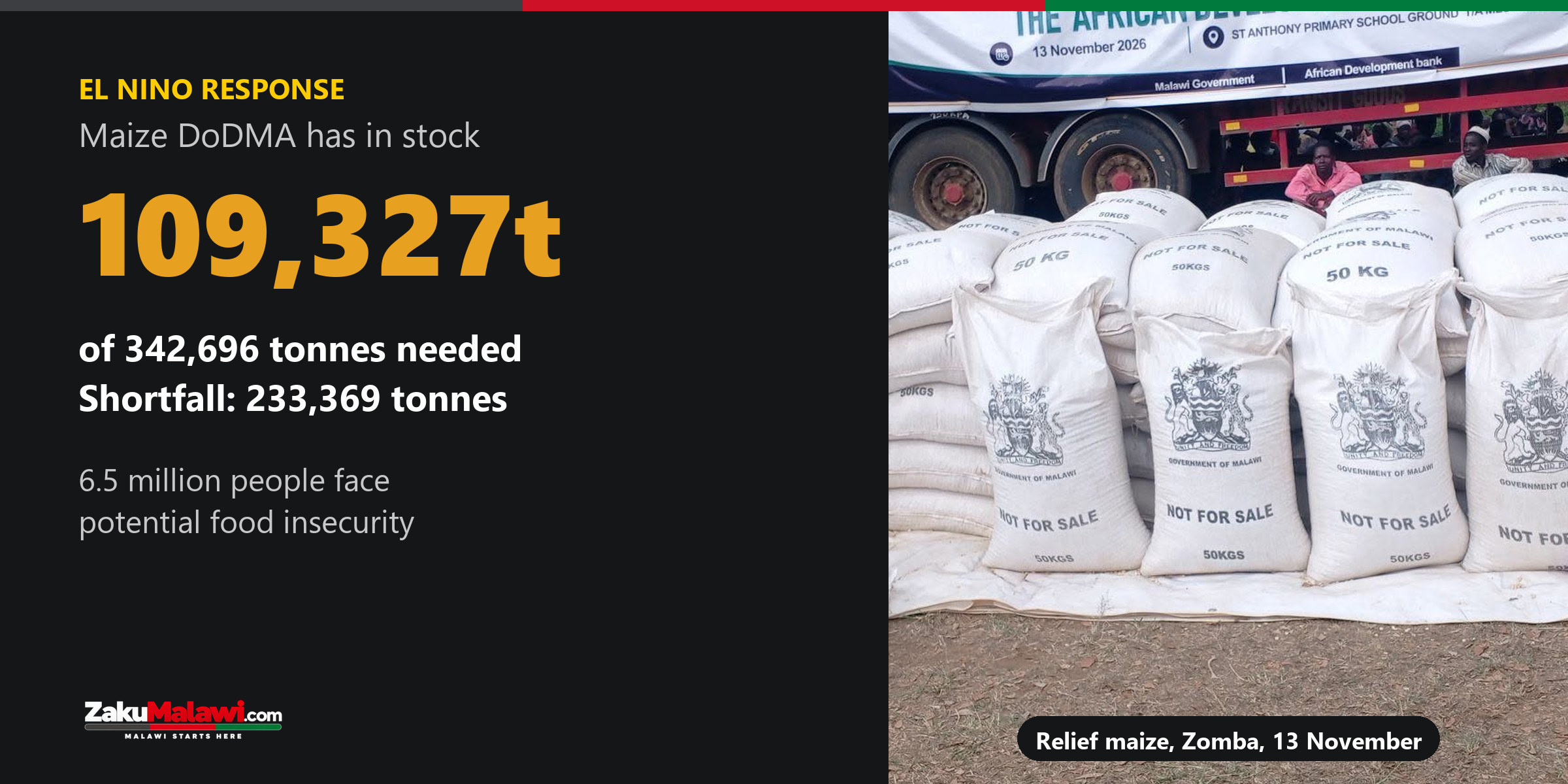
Malawi has 109,327 tonnes of maize in stock against the 342,696 tonnes needed for its El Niño response, Commissioner for Disaster Management Affairs Wilson Moleni told the Parliamentary Women’s Caucus in Lilongwe on Tuesday 17 November.
That leaves a shortfall of 233,369 tonnes, with 6.5 million people facing potential food insecurity, The Nation reported.
Key facts
- 109,327 tonnes in stock against 342,696 tonnes needed, a shortfall of 233,369 tonnes
- 6.5 million people face potential food insecurity
- The lean season adds 2.6 million people and 97,887 tonnes, taking the combined need to 440,583 tonnes
- K164 billion of the K488 billion plan has been raised, a gap of about K324 billion
Only a third secured
“This means we have secured only about a third of what we need,” Moleni said.
In stock now
109,327 tonnes
What DoDMA holds today
Needed for El Niño
342,696 tonnes
Shortfall: 233,369 tonnes
With the lean season added
440,583 tonnes
Even after NFRA buys 77,000 tonnes, stocks of 186,327 tonnes leave 254,256 tonnes short
The 97,887 tonnes are for the 2.6 million people expected to need help in the 2026/27 lean season, a programme DoDMA launched in Zomba on 13 November. Moleni said the extra maize from the National Food Reserve Agency (NFRA) would help, but would not be enough.
The funding gap
DoDMA has raised K164 billion of the K488 billion needed for its revised preparedness plan. Moleni said the shortfall could undermine the help planned for vulnerable households. The plan, published in September, covers 14 priority areas and 23 drought-prone districts.
Drought risk
DoDMA’s seasonal outlook shows below-normal rainfall is likely in most of southern and central Malawi, with long dry spells that could hurt crops. Lower harvests could push up food prices for households that buy their food at markets. Nsanje, Mangochi and Zomba districts have been picked for help before the shocks hit, and the plan includes paying premiums for the country’s drought insurance.
What MPs said
Women’s Caucus chairperson Mary Maulidi Khembo called the situation worrisome. “The funding gap is too big and it is worrisome because if people are not adequately assisted, they will eventually turn to us as parliamentarians for help, yet we do not have the resources to meet all their needs,” she said. She said the caucus would take the matter to the Ministry of Finance, Economic Planning and Decentralisation.
Check where to buy maize, and at what price, in our ADMARC maize guide.