
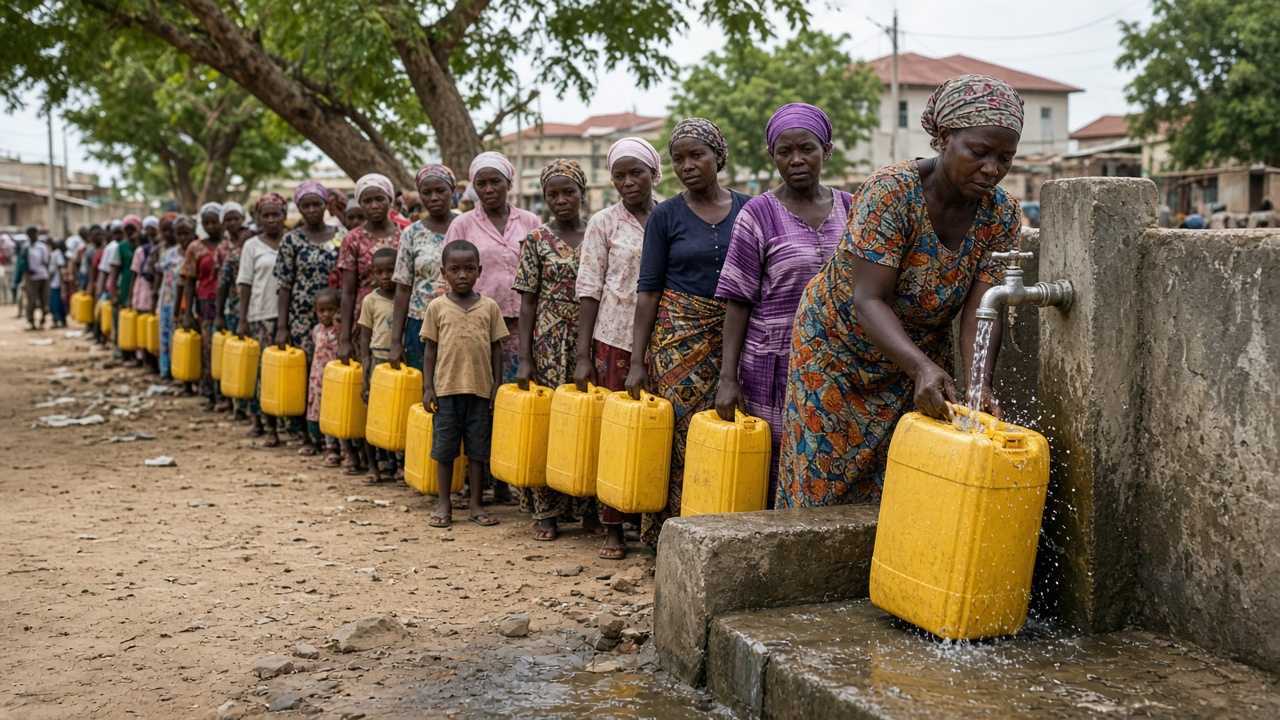
Quick summary: Lilongwe’s water crisis stems from ageing infrastructure, rapid urban growth, low reservoir levels in dry seasons, and high non-revenue water losses. The Lilongwe Water Board (LWB) rotates supply to manage pressure – check their official channels for zone schedules.
Residents across Lilongwe regularly experience dry taps, low pressure, and unpredictable supply – especially in areas on higher ground or at the end of distribution lines. The problem is not new, but dry spells and population growth have made shortages more visible in recent years.
Why shortages happen
Lilongwe draws much of its water from the Diamphwe and Lilongwe rivers and associated dams. When rainfall is below average, reservoir levels fall and treatment plants cannot meet peak demand. At the same time, leaks in old pipes, illegal connections, and billing challenges mean a large share of treated water never reaches paying customers – a problem utilities call non-revenue water.
Urban expansion has outpaced network upgrades in several suburbs. New housing estates in Areas 43, 47, and along the Lilongwe-Salima road have added demand faster than mains and pumping capacity could follow. Power outages at pumping stations – linked to ESCOM load shedding – can interrupt supply even when reservoirs hold enough water.
Areas commonly affected
Complaints tend to cluster in high-lying neighbourhoods such as Areas 10, 12, 43, and parts of City Centre, as well as newer developments on the city’s edges. Central and lower-lying areas often fare better, but no zone is immune during severe dry periods. LWB sometimes publishes rationing schedules by zone; follow their Facebook page and SMS alerts where available.
What you can do
Store drinking water in clean, covered containers – never assume the next supply window will arrive on time. Fix household leaks promptly; a dripping tap wastes litres daily. Report burst mains to LWB rather than bypassing meters. Where affordable, rainwater harvesting and boreholes (with proper testing) offer backup, though groundwater quality varies.
Long-term relief depends on the Kamuzu Dam II project, network rehabilitation, and better demand management. Residents can advocate for timely project completion and pay bills to help the utility invest in repairs.